Google has announced a UAE policy update for cryptocurrency exchanges and software wallets beginning 21 October 2026. Its October notice lists CMA, DFSA, FSRA and VARA and requires Google certification. This is an announced platform-policy change, not evidence of a new law or permission for every crypto business to advertise.
Checked on 20 October: Google’s current cryptocurrency policy still describes the UAE route as FSRA licensing to operate a Multilateral Trading Facility or VARA licensing. The announcement and current policy therefore need to be read with their dates in view. Confirm the updated requirements and your account instructions before launching or changing a campaign.
Define the product your ad actually promotes
Write a plain-language description of the service on the destination page. Identify the business providing it, the customer action and the UAE audience you intend to reach. Keep each distinct product separate in the review. A description such as “crypto platform” is too broad to help the responsible reviewer assess the advertised activity.
Ask the responsible owner to confirm permissions
Bring the exact entity name, relevant registration record and product description to your compliance owner. Ask them to confirm the applicable permission and its scope. Do not assume that the appearance of an authority in the notice means every licence it issues covers your product. Refer unresolved licensing questions to qualified counsel.
Keep certification separate from the launch decision
Record the Google certification status for the relevant account alongside any outstanding instructions. Keep the source link and the date of each check. The team member authorizing the campaign should be able to distinguish an application in progress, a confirmed decision and a requirement that still needs clarification.
Review the destination before changing campaigns
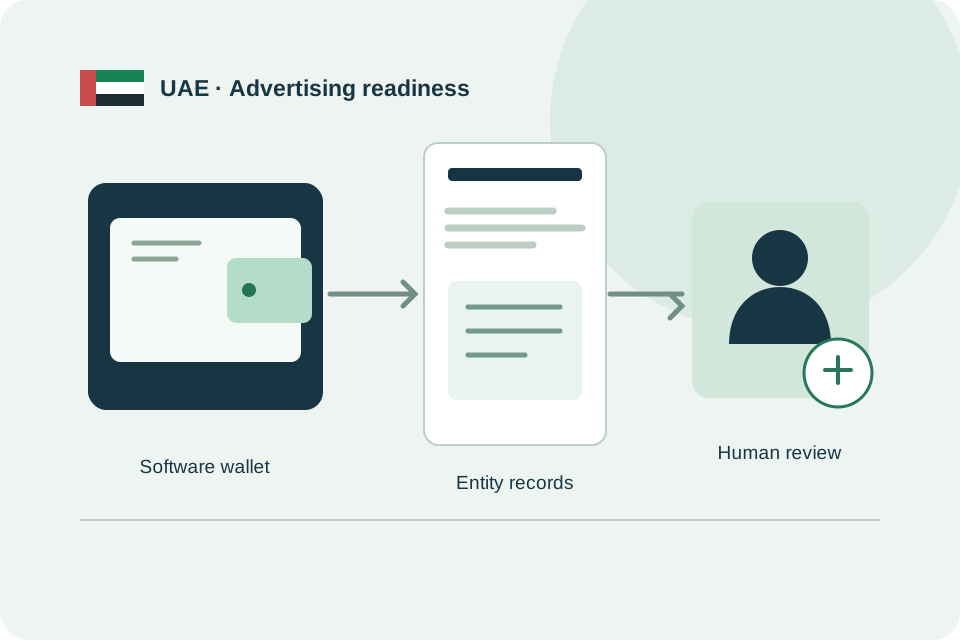
Compare the advertised entity, service and customer-facing statements across the selected landing pages. An AI-assisted evidence workflow can help collect public text and flag differences for review. A person still needs to verify the underlying records, decide what needs correction and confirm that the page accurately describes the service.
The same announcement has inconsistent product wording in its separate complex speculative financial products section. This article does not interpret eligibility for CFDs or rolling spot forex. Seek clarification from Google for those products rather than applying the crypto section to them.
How to organize your team’s next step
Use one short review record per product: target market, legal entity, advertised URL, permission evidence, certification status and named reviewer. Save the announcement beside the current policy so a later reviewer can see what changed. Assign unresolved questions before scheduling launch. This is a practical preparation workflow, not a substitute for a licensing decision or Google’s account-specific instructions.
Put the findings to work
AI Gaur combines AI-assisted evidence collection with human review to identify inconsistencies in selected pages and supplied business records. Start with your website, target market and notice type; we will confirm a bounded readiness-audit scope and quote. AI Gaur LLC is independent of Google and G2RS, does not provide legal counsel and cannot guarantee certification or ad approval.